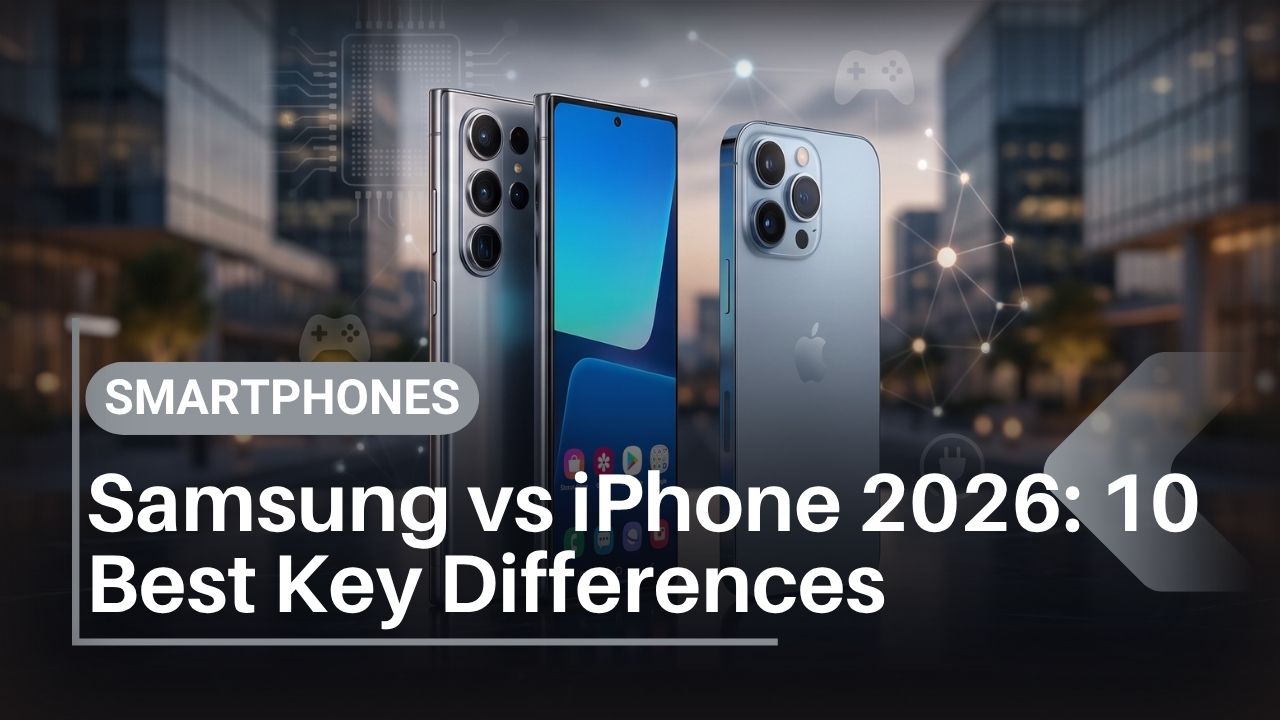
Samsung vs iPhone remains one of the most important smartphone comparisons for Pakistani buyers in 2026. Both companies make excellent premium phones, but they approach the smartphone very differently.
Apple controls the iPhone, iOS and its core silicon, giving it unusually tight hardware-software integration. Samsung builds a much broader Galaxy portfolio around Google’s Android operating system and its own One UI interface. Samsung also sells everything from mainstream Galaxy A phones to Galaxy S flagships and Galaxy Z foldables.
The result is not a simple question of which manufacturer is “better.” An iPhone can be the better purchase for someone using a Mac, Apple Watch and AirPods. A Samsung Galaxy can make considerably more sense for someone who wants Android flexibility, stronger multitasking options, stylus functionality on supported models or a foldable.
Pakistan adds practical considerations that international comparisons can miss: PTA/DIRBS compliance, imported versus officially distributed devices, local warranty, resale demand and rapidly changing prices.
This Samsung vs iPhone comparison focuses on those real purchasing decisions rather than declaring an arbitrary winner from specifications alone. Readers still deciding among the wider market can also see IT Magazine’s best smartphones in Pakistan for 2026.
Is Samsung or iPhone Better in 2026?
Samsung is generally the better fit if you want Android customization, broader hardware choice, advanced multitasking, foldables or a device outside the premium iPhone price structure. Apple iPhone is generally the better fit if you prefer iOS, already use Apple products, prioritize seamless Apple ecosystem integration or frequently shoot video.
At flagship level, both companies provide high-performance processors, excellent OLED/AMOLED displays, advanced cameras, 5G connectivity, biometric security and increasingly sophisticated AI features.
The biggest difference is ecosystem rather than raw speed.
For a Pakistani buyer, the final decision should also include the device’s actual market price, PTA status, warranty and local repair options.
Key Takeaways
- Samsung uses Android with One UI; Apple uses iOS.
- Samsung offers a much wider range of smartphone designs and prices.
- iPhone provides especially tight integration with Mac, Apple Watch, AirPods and Apple’s services.
- Samsung’s Galaxy ecosystem works across Android, Windows and Samsung products.
- Both manufacturers offer excellent flagship cameras; the winner depends on photography and video requirements.
- Samsung has established Galaxy Z foldable phones, while conventional iPhones use a non-folding design unless Apple’s current official lineup states otherwise.
- Both companies now make AI an important part of their smartphone software.
- Apple’s and Samsung’s premium devices can both be suitable for demanding mobile games.
- Storage capacity matters because premium Galaxy S and iPhone models generally do not depend on microSD expansion.
- Pakistani buyers should verify PTA/DIRBS status independently before buying imported or used phones.
Table of Contents
Samsung vs iPhone Comparison at a Glance
| Category | Samsung Galaxy | Apple iPhone |
| Operating system | Android with One UI | iOS |
| Hardware range | Very broad | More focused |
| Budget models | Yes | Apple focuses more heavily on higher price tiers |
| Flagships | Galaxy S series | iPhone / iPhone Pro families |
| Foldables | Galaxy Z Fold and Z Flip | Verify Apple’s current lineup |
| App ecosystem | Google Play and Galaxy Store | Apple App Store |
| Desktop integration | Strong with Windows/Galaxy ecosystem | Particularly strong with Mac |
| Smartwatch ecosystem | Galaxy Watch | Apple Watch |
| Stylus | Available on supported Galaxy devices | No direct iPhone equivalent |
| Customization | Extensive | More controlled |
| Premium cameras | Excellent | Excellent |
| Video | Excellent | A major iPhone strength |
| 5G | Supported on compatible models | Supported on compatible models |
| AI | Galaxy AI and Google-powered features, depending on model | Apple Intelligence/features vary by model, language and region |
| Best fit | Flexibility and hardware choice | Apple ecosystem integration |
Specifications and software capabilities vary by model, region and software version. Always verify the exact product through Samsung’s official website or Apple’s official iPhone pages before buying.
Difference 1: Android and One UI vs iOS
The most important Samsung vs iPhone difference is the operating system.
Samsung Galaxy smartphones run Android, the operating system developed by Google, with Samsung’s One UI software layer. The iPhone runs Apple’s iOS.
This distinction affects almost everything you do after purchasing the phone.
What Samsung’s Android approach offers
Android generally gives users considerable control over home-screen layouts, default applications, file management and device behavior. Samsung extends Android with One UI features, Galaxy services and multitasking tools.
Applications are widely available through Google Play, while Samsung also operates the Galaxy Store. Android’s broader platform architecture offers options that some power users value.
Samsung is therefore particularly attractive to people who like configuring a phone around their own workflow.
Technical readers can learn more from Google’s official Android documentation.
What iOS offers
Apple develops iOS specifically for the iPhone rather than licensing it to numerous smartphone manufacturers.
That tighter control allows Apple to coordinate hardware and software across a relatively limited device range. iOS is generally consistent from one modern iPhone to another, while integration with Apple’s other devices is one of its defining strengths.
iPhone users also benefit from Apple’s tightly integrated services and App Store environment.
Which operating system is better?
Neither operating system is universally better.
Choose Samsung if customization, flexible workflows and Android are important. Choose iPhone if you prefer iOS or already have Apple products.
People switching ecosystems should consider their purchased apps, cloud photo libraries, passwords, accessories and smartwatch before making the move. Those costs can matter more than a small difference in camera or benchmark performance.
For background on the broader category, the smartphone overview on Wikipedia provides useful historical context.
Difference 2: Samsung Gives You More Hardware Choices
Samsung has a fundamentally broader smartphone portfolio than Apple.
Samsung’s Galaxy S series covers premium conventional smartphones. The Galaxy Z family provides foldable devices, while the Galaxy A range serves more price-sensitive parts of the market.
Apple’s iPhone lineup is more concentrated.
This gives Samsung an important advantage for buyers who want to choose across radically different designs and budgets rather than simply deciding which version of an iPhone to purchase.
Galaxy S vs Galaxy Z
Galaxy S devices are conventional premium smartphones. Samsung’s Ultra models are typically aimed at enthusiasts wanting the company’s most advanced conventional flagship hardware.
Galaxy Z Fold devices unfold into a larger tablet-like display. Galaxy Z Flip phones focus on becoming more compact when folded.
Foldables have practical trade-offs. Hinges and flexible screens create additional durability and repair considerations, so buyers should not purchase one merely because the form factor is novel.
Anyone considering this category should read IT Magazine’s Samsung Galaxy Z Fold and Z Flip guide.
Samsung also competes below flagship level
Another major distinction is Samsung’s Galaxy A range.
Consumers who do not have flagship budgets can stay within Samsung’s ecosystem without purchasing an old premium device. You can explore the current positioning through the Samsung Galaxy budget-series guide.
Against those models, Samsung also competes with Xiaomi, Realme, Oppo, Vivo, Infinix and Tecno. That competition can be intense, so brand loyalty should never replace an actual specification and price comparison.
Difference 3: Performance and Gaming
Both Samsung and Apple make exceptionally fast premium smartphones.
Apple develops its own A-series mobile processors for iPhones. Samsung’s Galaxy lineup uses different chip platforms depending on the product, generation and region, so specifications must be checked on the exact model.
Qualcomm Snapdragon platforms power many high-performance Android devices, while MediaTek is another major semiconductor company with competitive Dimensity platforms across the Android market.
Avoid reducing this comparison to “Snapdragon versus iPhone.”
A phone’s real performance depends on CPU speed, graphics, thermal design, memory, storage, software optimization and sustained performance.
Which is better for gaming?
Both premium Galaxy and iPhone models can be excellent gaming phones.
Apple’s combination of powerful silicon and tightly controlled hardware/software is well suited to demanding games. Samsung’s flagship Galaxy phones combine powerful processors with high-quality displays and extensive Android gaming support.
For a competitive gamer, check:
- Sustained frame rate rather than peak benchmark result
- Thermal throttling during long sessions
- Screen response and refresh rate
- Battery drain
- Game-specific frame-rate support
- Storage capacity
- Wi-Fi/mobile-network performance
- Controller compatibility
Dedicated gaming phones can still outperform conventional flagships in specialist features. If PUBG Mobile, Call of Duty Mobile or similar titles are the priority, compare both brands against IT Magazine’s best gaming phones in Pakistan.
Difference 4: Cameras and Video
The camera discussion is where Samsung vs iPhone comparisons often become misleading.
Megapixel count does not tell you which camera is better.
Image quality depends on sensors, lenses, focal lengths, autofocus, optical image stabilization, dynamic range and computational processing.
Premium Samsung Galaxy devices generally emphasize camera versatility. Ultra-class Galaxy phones are particularly relevant to users who want multiple focal lengths and extensive zoom capabilities.
Apple takes its own hardware-and-software approach to photography, and video is a longstanding strength of premium iPhones. That makes iPhone especially attractive to creators who record substantial footage.
Which has the better camera?
Samsung may appeal more to a user prioritizing zoom versatility and a broad collection of camera options. iPhone may be preferable for someone prioritizing consistent video workflows and Apple’s video ecosystem.
The exact answer changes by model and camera mode.
Do not compare a budget Galaxy A phone with an iPhone Pro and conclude that all iPhones have better cameras than Samsung phones. Equally, an expensive Galaxy Ultra cannot tell you how a mid-range Samsung compares with a similarly priced competitor.
Photography enthusiasts should compare actual full-resolution samples from the specific devices being purchased.
Selfie-heavy buyers can also use IT Magazine’s best selfie phones in Pakistan guide.
Difference 5: Displays, Design and Foldable Phones
Samsung is one of the world’s major display technology companies, and AMOLED panels are central to the Galaxy smartphone experience. Apple also uses high-quality OLED displays in modern premium iPhones.
AMOLED is a form of OLED display technology. Unlike an LCD, OLED pixels emit their own light, which enables very deep blacks and excellent contrast.
Panel technology alone is not a quality score.
A useful Samsung vs iPhone display comparison should examine brightness, color accuracy, resolution, refresh-rate behavior, outdoor visibility, HDR capabilities and flicker characteristics.
If you want a deeper technical explanation, read AMOLED vs LCD vs IPS.
Samsung’s foldable advantage
Samsung has another major hardware distinction: established Galaxy Z Fold and Z Flip products.
A Fold can provide much more screen area for documents, multitasking and entertainment. A Flip provides a smaller folded footprint.
That advantage only matters if you genuinely want a folding device. Conventional iPhones and Galaxy S phones remain simpler designs with fewer mechanical considerations.
Difference 6: AI Features
AI has become central to Samsung and Apple’s smartphone strategies, although consumers should avoid treating “AI phone” as a technical specification.
Samsung combines Galaxy AI features with its software ecosystem and, for some functions, technology from Google or other partners. Depending on model and software release, AI functions can assist with areas such as translation, image editing, search, transcription and writing.
Apple has similarly integrated Apple Intelligence capabilities into compatible hardware and operating-system releases.
Availability is the important caveat.
AI functions can differ according to device, OS version, language, account, region and sometimes internet connectivity. Some processing happens locally while other tasks may depend on cloud services.
Before buying either phone specifically for AI, verify four things: whether the feature supports the exact model, whether it works in Pakistan, whether your required language is supported and whether there are ongoing service requirements.
AI-generated information can also be wrong. Do not treat a smartphone’s generated summary as an authoritative source for medical, legal or financial decisions.
Readers wanting a stronger foundation can explore IT Magazine’s guide to key artificial-intelligence facts.
Difference 7: Battery Life and Charging
Battery comparisons based only on milliamp-hours are unreliable.
A battery’s rated capacity is important, but real-world endurance depends on processor efficiency, screen size, refresh rate, modem behavior, cellular signal quality, applications and operating-system optimization.
This is particularly relevant when comparing Samsung vs iPhone because Android and iOS use different hardware and software strategies. Comparing battery-capacity numbers directly does not tell you which lasts longer.
Instead, look at standardized battery tests for the exact models.
What affects battery life?
Gaming, camera recording, navigation, high display brightness, poor mobile signal and prolonged 5G activity can all increase energy use.
Battery aging also matters. Lithium-ion batteries gradually lose capacity with charge cycles and time, making used-phone battery condition an important purchasing factor.
If endurance is your main concern, compare the specific devices in IT Magazine’s best battery phones in Pakistan guide.
Difference 8: Software Updates, Security and Long-Term Ownership
Software support matters far more than many specification sheets suggest.
A premium smartphone can have perfectly capable hardware several years after launch, but its long-term usefulness also depends on security updates and operating-system support.
Both Samsung and Apple have strong reasons to be considered for long-term ownership, but update policies should be checked for the exact model rather than assumed across an entire brand.
Samsung has made multi-year update commitments for qualifying Galaxy models. Apple also supports iPhones for extended periods, although buyers should check current compatibility documentation rather than relying on an assumed fixed number for every device.
Security is similarly important.
Apple operates a highly controlled hardware/software ecosystem. Android has its own security architecture, while Samsung adds technologies and security features to Galaxy devices.
For authoritative platform details, use Apple’s Platform Security documentation and Google’s Android security documentation.
Difference 9: Ecosystem and Connected Devices
Ecosystem is arguably the strongest reason to select one platform over the other.
An ecosystem is the collection of hardware, software, applications and services that work together around your smartphone.
Apple’s ecosystem
An iPhone can integrate deeply with:
- Mac
- iPad
- Apple Watch
- AirPods
- iCloud
- Apple’s communication and continuity services
People who already own several Apple products can lose useful integrations by moving to Android.
Samsung’s ecosystem
Samsung connects Galaxy phones with:
- Galaxy Watch
- Galaxy Buds
- Galaxy Tab
- SmartThings-compatible products
- Windows PCs through supported integrations
- Google’s Android services
Samsung’s ecosystem also benefits from Android’s broader relationship with Google services and third-party devices.
If you are deciding beyond smartphones too, IT Magazine’s Samsung Galaxy Tab vs iPad comparison illustrates how the two ecosystems extend into tablets.
Difference 10: Price, Resale and Value in Pakistan
Price is where a global Samsung vs iPhone comparison becomes specifically Pakistani.
Do not rely on one static “price in Pakistan” figure. Smartphone prices can change because of currency movements, taxes, retailer margins, supply and promotions.
Samsung has an obvious advantage in selection because it sells products across more price tiers. Apple focuses more heavily on premium-priced smartphones, although older iPhone generations may remain available from retailers.
iPhones also maintain strong demand in Pakistan’s used-phone market, but resale value depends heavily on condition, battery health, storage, model, PTA status and whether repairs have been performed.
Premium Samsung Galaxy phones also have active resale markets, though depreciation varies substantially by model.
The meaningful calculation is total ownership cost:
Purchase price − resale value + registration costs where applicable + likely accessory/repair costs.
That figure can produce a different winner than the initial shop price.
Samsung vs iPhone in Pakistan: PTA, DIRBS and IMEI
Pakistani buyers should never ignore device registration.
IMEI stands for International Mobile Equipment Identity. It identifies a mobile device for cellular-network purposes; multi-SIM devices can have multiple IMEIs.
Pakistan’s Device Identification, Registration and Blocking System (DIRBS) is relevant to mobile-device identification and compliance.
An imported phone advertised as “non-PTA” needs careful investigation before purchase. Registration requirements and applicable taxes or procedures can change.
Use the latest instructions from the Pakistan Telecommunication Authority rather than trusting an outdated tax table or retailer screenshot.
The device’s status should be independently verified through the current official PTA mechanism.
This is particularly important with used and imported iPhones and Galaxy flagships, where a low advertised price can omit an important part of the real ownership cost.
Samsung vs iPhone for 5G in Pakistan
Both Samsung and Apple sell 5G-capable smartphones.
However, owning a 5G phone does not guarantee 5G service.
The smartphone must support the relevant frequency bands, and a compatible operator needs service in your location. SIM/account provisioning and network deployment also matter.
Pakistan’s 5G landscape is time-sensitive in 2026. Check current announcements from PTA and your mobile network operator for commercial availability and coverage rather than relying on an article published months earlier.
For a vendor-neutral definition and global context, the GSMA’s 5G resources explain the underlying mobile-network technology.
Samsung Pros and Cons
Pros
- Wide range of smartphone prices and designs
- Extensive Android customization
- Strong AMOLED displays
- Established Fold and Flip products
- Advanced flagship camera systems
- Deep Samsung and Google ecosystem
- Strong multitasking on suitable devices
- S Pen capability on supported models
Cons
- Experience and update policies vary across the large Galaxy range
- Some premium models are expensive
- Processor configurations can vary by device or region
- Foldables introduce additional durability and repair considerations
iPhone Pros and Cons
Pros
- Tight hardware and iOS integration
- Excellent Apple ecosystem
- Strong premium performance
- Particularly capable video experience
- Consistent interface across supported iPhones
- Strong used-market demand for popular models
- Long-term software support is a major strength of the platform
Cons
- Less hardware variety than Samsung
- Limited customization compared with Android in some areas
- Premium pricing
- No microSD expansion on current iPhones
- Switching into or out of Apple’s ecosystem can create extra costs
How to Choose Between Samsung and iPhone: Step-by-Step Guide
Step 1: Choose your operating system
If you strongly prefer Android, start with Samsung. If you strongly prefer iOS, choose an iPhone. The decision becomes much easier once the operating system is settled.
Step 2: Audit your existing devices
Own a Mac, Apple Watch and AirPods? An iPhone may provide the most convenient integration.
Own a Galaxy Tab, Galaxy Watch, Windows PC or extensive Google ecosystem? Samsung may fit more naturally.
Step 3: Define your main use
A photographer should prioritize camera capabilities. A competitive gamer should examine sustained performance. A business user may value software support and multitasking more.
Step 4: Select storage carefully
128GB may suit moderate use. 256GB is a safer choice for people who take lots of photographs, store offline media or keep phones for several years.
Premium smartphones generally make storage difficult or impossible to upgrade internally after purchase.
Use IT Magazine’s 128GB vs 256GB phone storage guide before deciding.
Step 5: Compare equivalent models
Do not compare Samsung’s cheapest Galaxy with Apple’s highest-end iPhone Pro Max.
Compare products with similar prices and intended market positions.
Step 6: Calculate the total Pakistani cost
Include the purchase price, applicable PTA/device-registration requirements, warranty, accessories and likely resale value.
Step 7: Verify before payment
Confirm IMEI/PTA status, warranty, storage, regional variant and physical condition. For a used device, also test the cameras, display, charging port, speakers, microphone, cellular connection, Wi-Fi and biometrics.
Expert Buying Tips for Samsung vs iPhone
Do not switch ecosystems for a tiny benchmark advantage. Most current premium smartphones are already more than fast enough for normal applications.
Buy enough storage from the beginning. An extra storage tier can be more useful after three years than a feature you only use once.
If camera performance matters, compare the specific focal lengths and video modes you use. A specification table cannot tell you whether you prefer Apple’s or Samsung’s image processing.
For used iPhones, battery condition and activation status deserve close attention. Make sure the previous owner’s account and activation lock are properly removed.
For used Samsung devices, inspect OLED panels carefully for burn-in, lines, touch problems or previous replacement. These checks are worthwhile on any used OLED smartphone, not just Samsung.
Finally, buy from a seller that provides a proper invoice and clear warranty conditions.
Samsung vs iPhone Summary Box
Best for Android flexibility: Samsung.
Best for Apple ecosystem integration: iPhone.
Best for foldables: Samsung’s Galaxy Z lineup is the established choice between these two ecosystems.
Best for video creators: iPhone is a particularly compelling option, although premium Samsung phones are highly capable.
Best for hardware choice: Samsung.
Best for users already using Mac and Apple Watch: iPhone.
Best for budget selection between these two brands: Samsung offers the broader range.
Best overall: whichever platform better matches your devices, budget and workflow. There is no credible universal winner.
Frequently Asked Questions
Is Samsung better than iPhone in 2026?
Samsung is better for users who prioritize Android flexibility, greater hardware variety, foldable designs and Galaxy-specific productivity features. iPhone can be better for people who value iOS, Apple ecosystem integration and Apple’s camera/video workflows.
Which has the better camera, Samsung or iPhone?
Both produce excellent premium camera phones. Samsung’s Ultra models are attractive for camera versatility and zoom options, while Apple’s Pro iPhones are particularly strong choices for video. Compare the exact models rather than brands.
Which is better for gaming, Samsung or iPhone?
Premium devices from both manufacturers are highly capable gaming phones. The correct comparison should include sustained performance, thermals, game support, battery life and display behavior instead of only benchmark scores.
Which lasts longer, Samsung or iPhone?
Physical lifespan varies by device, use and repair history. Both brands offer phones suitable for multi-year ownership. Check the exact model’s official update commitment and consider battery replacement availability if you plan to keep it for many years.
Is Samsung cheaper than iPhone in Pakistan?
Samsung offers smartphones across a much wider range of prices, including mid-range models below Apple’s usual iPhone positioning. Premium Galaxy S Ultra and foldable devices can still be very expensive.
Does Samsung have better displays than iPhone?
Both companies’ premium smartphones use high-quality OLED-class displays. Instead of deciding by brand, compare brightness, resolution, refresh behavior, color accuracy and outdoor visibility on the exact models.
Does Samsung use Android?
Yes. Samsung Galaxy smartphones run Google’s Android operating system with Samsung’s One UI software and services layered on top.
Can Samsung use Google Play?
Yes. Mainstream Samsung Android smartphones support Google Play in markets where Google Mobile Services are supplied, alongside Samsung’s Galaxy Store.
Is iPhone safer than Samsung?
Both platforms include extensive security technologies. Security also depends on keeping the device updated, using strong authentication, protecting your Apple or Google account and installing trustworthy software. It is misleading to call either platform universally “unsafe.”
Should I buy a used iPhone or new Samsung phone?
A used iPhone can offer premium performance for less money, while a new Samsung may offer a fresh battery, warranty and less uncertainty about previous repairs. Compare battery health, software support, PTA status and total ownership cost.
Which is better for students in Pakistan?
A Samsung Galaxy A model can make more financial sense for students with limited budgets because Samsung covers more price tiers. Students already using Apple hardware may prefer an iPhone if the total cost is affordable.
Do Samsung and iPhone support 5G in Pakistan?
Compatible modern models support 5G technology, but service depends on Pakistani operator deployment, compatible bands, provisioning and local coverage. Check the current situation with PTA and your operator.
How much smartphone storage should I buy?
128GB can be adequate for moderate use, while 256GB is generally more comfortable for long ownership, games, video and large photo libraries. Heavy creators may need 512GB or more.
Is Samsung’s AI better than Apple’s AI?
There is no useful universal answer because the feature sets, supported models and software releases evolve. Compare the specific AI functions you intend to use and confirm their regional and language availability.
Should I buy Samsung or iPhone for four or five years?
Both can be sensible long-term choices when you select a model with adequate official software support, sufficient storage and access to battery/service options. Check the exact device’s current manufacturer support commitment before buying.
Conclusion
Samsung vs iPhone in 2026 is ultimately a choice between two mature but distinctly different smartphone ecosystems.
Samsung offers the broader hardware selection. Galaxy buyers can choose mainstream devices, premium Galaxy S flagships and Galaxy Z foldables while benefiting from Android, One UI, Google services, AMOLED displays and Samsung’s broader ecosystem. This flexibility makes Samsung particularly attractive to users who like customization, multitasking and hardware choice.
Apple offers a more tightly controlled combination of iPhone hardware, Apple silicon and iOS. Its greatest advantages become particularly clear for people already using Mac, Apple Watch, AirPods and Apple’s services, while premium iPhones remain highly compelling for demanding photography and especially video workflows.
Pakistani consumers need to add one final layer to that decision. Compare the actual local price, storage, warranty, remaining software support and PTA/DIRBS status—not simply the manufacturer’s global retail price or a specification sheet.
If both phones meet your technical needs, choose the ecosystem that fits the devices and services you already use. That difference will affect everyday ownership far more than a minor benchmark win.