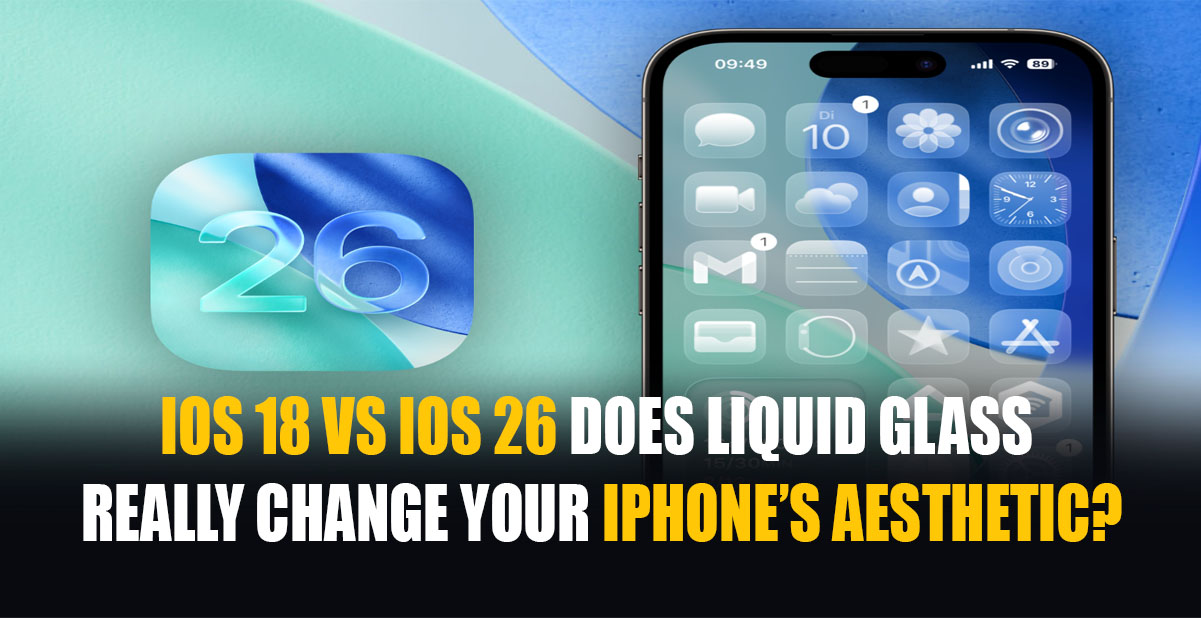
Meta Description: iOS 18 vs. iOS 26 Liquid Glass: Does it transform your iPhone’s look? We dissect the aesthetic evolution from iOS 18’s foundation to iOS 26’s potential revolution. See the difference!
iOS 18 vs. iOS 26: Does Liquid Glass Really Change Your iPhone’s Aesthetic?
The relentless march of iOS updates brings whispers of revolutionary features. Rumors have a way of slipping into our minds and settling down. Among them, “Liquid Glass. ” Is it revolutionary, or just another buzzword? Let’s break it down. Liquid Glass promises to reshape your iPhone’s look—maybe even its entire feel. But before we get swept up, we need clarity. What exactly is it? And more importantly, does it matter for users today, or is it still just a glimmer in Apple’s future plans? iOS 18 is here now. Tangible. You can see its style shifts in the wild. iOS 26, on the other hand, hovers on the horizon—almost an idea more than a product. Some claim Liquid Glass will be its signature look. We’re not just talking about a slick name. The debate is about substance. Is Liquid Glass a real, touchable transformation or just another layer of digital polish? Knowing the difference is key. So, does Liquid Glass really change your iPhone’s vibe? Or is the aesthetic mostly marketing? This is where the current reality meets tomorrow’s promise—a crossroads of design, technology, and expectation. Step back, look close, see what’s real.
Liquid Glass Demystified: Beyond the Buzzword
Before dissecting iOS 18 vs. iOS 26: Does Liquid Glass Really Change Your iPhone’s Aesthetic?, we need to define the star of the show. Liquid Glass isn’t a layer you can touch. There’s no invisible shield on your screen. Instead, it’s a software design language—a new direction Apple is exploring. Picture it as a set of principles for building interfaces. Fluid. Organic. More lifelike. Apple uses advanced graphics, realistic animations, nuanced lighting, and depth effects to reshape how apps look and feel. Flat images? Not anymore. Buttons and icons seem to float, like objects caught in liquid glass. In iOS 18 compared to iOS 26, the main idea is simple: increase realism, draw users in, and make everyday interactions more visually appealing. How? With these key design moves:
Subtle Refractions: Simulating how light bends when passing through glass or liquid at UI edges.
- Dynamic Lighting & Shadows: Elements reacting realistically to virtual light sources, casting soft shadows for depth.
- Physics-Based Animations: Icons and buttons moving with natural momentum, elasticity, and weight.
- Advanced Blur & Transparency: Creating sophisticated frosted glass effects that reveal content beneath.
- Fluid Morphing: Smooth transitions where elements transform shape seamlessly.
iOS 18: The Liquid Glass Foundation is Laid
The exploration of iOS 18 vs. iOS 26: Does Liquid Glass Really Change Your iPhone’s Aesthetic? starts firmly in the present. iOS 18 marks Apple’s boldest step towards Liquid Glass, introducing its core principles across the system. While not the full-blown revolution some imagined, its impact is significant and lays the groundwork for the future discussed in iOS 18 vs. iOS 26: Does Liquid Glass Really Change Your iPhone’s Aesthetic?. You experience Liquid Glass aesthetics daily in iOS 18:
- Control Center Redesign: The new modular panels exhibit pronounced frosted glass effects with enhanced depth. Toggling modules provides subtle physicality.
- Revamped Icons (Settings, etc.): Apple’s own icons received a refresh with more pronounced gradients, subtle highlights, and shadows, giving them a slightly more 3D, glass-like appearance compared to the flatter designs of iOS 17.
- Dynamic Lock Screen & Home Screen Depth: The parallax effect when tilting your phone is more pronounced. Wallpapers feel more integrated behind the icons and widgets, creating a stronger sense of layers separated by glass.
- Refined Animations: App opening/closing, folder expansions, and even keyboard pop-ups feel smoother and incorporate more natural physics, hinting at the “liquid” aspect.
- Enhanced Button States: Buttons exhibit more pronounced visual feedback when pressed, simulating a slight depression or highlight, adding tactility.
iOS 26: Projecting the Liquid Glass Evolution
When projecting forward for iOS 18 vs. iOS 26: Does Liquid Glass Really Change Your iPhone’s Aesthetic?, iOS 26 represents the potential zenith of this design language, built upon the foundation of iOS 18. Based on Apple’s trajectory and technological advancements (like more powerful chips and potentially advanced display tech), we can speculate on a more profound Liquid Glass experience shaping the core iOS 18 vs. iOS 26: Does Liquid Glass Really Change Your iPhone’s Aesthetic? question:
- Pervasive Depth & Realism: Expect Liquid Glass effects applied far more extensively – system-wide dialogs, menus, notifications, and even third-party app UIs (via enhanced APIs) could exhibit sophisticated glass and liquid simulations. Imagine notifications appearing as actual glass panes floating above your content.
- Hyper-Realistic Lighting: Dynamic, system-wide lighting could cast realistic shadows and highlights based on time of day or even ambient light sensor data, making the UI feel like part of your physical environment. Elements could glow or refract light with stunning accuracy.
- Advanced Interactive Physics: Interactions could feel even more tangible. Dragging an icon might create ripples in a virtual liquid layer beneath. Scrolling could have fluid inertia mimicking viscosity. Buttons might deform slightly under your virtual “touch.”
- AI-Powered Personalization: Liquid Glass aesthetics could adapt intelligently. Colors, translucency levels, and even animation styles might subtly shift based on your wallpaper, activity, or preferences learned over time.
- Potential Hardware Synergy: Rumors of future iPhone glass technologies (self-healing, variable opacity?) could physically complement the software Liquid Glass effects, creating a truly cohesive sensory experience.
Aesthetic Showdown: iOS 18 vs. iOS 26 Liquid Glass Impact
So, does Liquid Glass really change the iPhone’s aesthetic? The answer within iOS 18 vs. iOS 26: Does Liquid Glass Really Change Your iPhone’s Aesthetic? is a resounding Yes, but on a spectrum. Let’s break down the aesthetic differences central to iOS 18 vs. iOS 26: Does Liquid Glass Really Change Your iPhone’s Aesthetic?:
- iOS 18 (The Foundation):
- Change Level: Significant Evolution. Moves decisively away from stark flat design.
- Aesthetic Feel: Sophisticated, layered, subtly dimensional. Frosted glass is prominent. Feels more “designed” and premium.
- Key Visuals: Pronounced Control Center blur, refined icons with depth, stronger parallax, smoother physics animations.
- User Impact: Noticeably more polished and visually engaging than iOS 17. A clear step towards a richer aesthetic but still retains familiarity.
- iOS 26 (The Potential Zenith):
- Change Level: Potentially Revolutionary. Could redefine the iOS visual language.
- Aesthetic Feel: Immersive, hyper-realistic, deeply tactile, almost holographic. UI feels like interactive objects in a physical space.
- Key Visuals (Projected): System-wide advanced glass/liquid effects, dynamic environmental lighting integration, complex interactive physics, highly personalized visuals, potential hardware synergy.
- User Impact: A fundamentally different visual and interactive experience. Feels less like a traditional OS interface and more like a dynamic, responsive environment.
Beyond Looks: Functionality Meets Liquid Glass Aesthetics
The discussion of iOS 18 vs. iOS 26: Does Liquid Glass Really Change Your iPhone’s Aesthetic? isn’t purely superficial. This design philosophy aims to enhance usability:
- Visual Hierarchy: Depth and lighting do the heavy lifting. They guide your eyes, pointing to what matters most.
- Affordance: Realistic physics. Button states that tell a clear story. If it looks pressable, it probably is. Simple.
- Feedback: Small animations, gentle visual cues. Each action is met with a response. You know things are working.
- Reduced Cognitive Load: Spatial layouts feel intuitive. You don’t overthink where to go. Navigation becomes second nature.
- Delight: Smooth, attractive visuals. Using the phone feels pleasant, even a little rewarding. Emotional connection follows.
Optimizing for the Liquid Glass Era (Tips for Users & Developers)
Understanding iOS 18 vs. iOS 26: Does Liquid Glass Really Change Your iPhone’s Aesthetic? helps you adapt:
- For Users (iOS 18+):
- Embrace Dark Mode: Frosted glass effects and depth shine brightest against dark backgrounds.
- Choose High-Quality Wallpapers: Dynamic depth effects leverage your wallpaper. Pick detailed, high-res images.
- Experiment with Widgets: Widgets integrate into the layered aesthetic. Use them strategically.
- Pay Attention to Animations: Notice the new smoothness and physics – it’s part of the experience!
- For Developers (Future-Proofing):
- Adopt SwiftUI & New UIKit APIs: Apple provides tools to easily implement system-consistent blur, materials, and animations.
- Prioritize Smooth Performance: Janky animations break the Liquid Glass illusion. Optimize ruthlessly.
- Design with Depth & Light: Consider how UI elements exist in Z-space and react to light sources.
- Implement Meaningful Haptics: Combine visual Liquid Glass effects with precise Taptic Engine feedback for ultimate tactility.
- Test on Latest OS Betas: Stay ahead of Apple’s evolving design language and APIs.
The Verdict: Liquid Glass is Reshaping iPhone’s Visual Identity
Exploring iOS 18 vs. iOS 26: Does Liquid Glass Really Change Your iPhone’s Aesthetic? sets a narrative in motion. Yes, Liquid Glass actually is changing the iPhone’s look. With iOS 18, the shift is obvious—gone is the strictly flat design, replaced by layers of depth and soft highlights. It’s more refined. More tactile. The interface feels premium, inviting you to notice small details and subtle shadows. But iOS 26 holds another promise. If Apple delivers on its hints, things will move further—a leap toward an interface that behaves less like an image on a screen and more like a responsive object. Almost touchable. Liquid Glass isn’t just surface-level; it signals a deeper focus on realism and an immersive experience. The difference now in iOS 18 is noticeable. By iOS 26, it could be fundamental. The look and feel of the iPhone is moving toward something bright, shifting, and unmistakably physical.
Liquid Glass Aesthetics: Frequently Asked Questions (FAQs)
Q1: Is Liquid Glass a physical screen protector or coating?
A: Absolutely not. This is a common misconception central to iOS 18 vs. iOS 26: Does Liquid Glass Really Change Your iPhone’s Aesthetic?. Liquid Glass is purely a software-based design language developed by Apple. It uses advanced graphics techniques to create visual effects that mimic the properties of glass and liquid on your existing display. You don’t install it; it’s built into iOS 18 and will evolve in future versions like iOS 26.
Q2: What are the main visual differences caused by Liquid Glass in iOS 18?
A: iOS 18’s implementation of Liquid Glass, key to iOS 18 vs. iOS 26: Does Liquid Glass Really Change Your iPhone’s Aesthetic?, introduces:
- Stronger Frosted Glass Effects: Especially visible in the redesigned Control Center.
- More 3D-Like Icons: Apple’s own icons (Settings, Photos, etc.) have enhanced shading and highlights.
- Increased Depth Perception: The parallax effect between wallpaper and icons/widgets is more pronounced.
- Smoother, More Physical Animations: App launches, folder opens, and interactions feel more natural and weighted.
Q3: How could Liquid Glass change things even more in iOS 26?
A: Speculating on iOS 18 vs. iOS 26: Does Liquid Glass Really Change Your iPhone’s Aesthetic?, iOS 26 could bring:
- Effects Everywhere: Glass/liquid simulations in notifications, menus, dialogs system-wide.
- Real-Time Dynamic Lighting: UI elements realistically reacting to virtual or even ambient light.
- Complex Interactive Physics: Ripples, fluid dragging, deformable buttons.
- AI-Personalized Aesthetics: Visuals adapting to your usage, wallpaper, or environment.
- Potential Hardware Integration: Synergy with future physical glass technologies on iPhones.
Q4: Does Liquid Glass drain battery life faster?
A: Sophisticated visual effects do require GPU resources. Apple heavily optimizes these effects, and on modern iPhones (A15 Bionic and later), the impact in iOS 18 is generally minimal for typical use. However, extremely complex future implementations in iOS 26 could have a more noticeable impact if not meticulously optimized – a trade-off for the advanced aesthetics explored in iOS 18 vs. iOS 26: Does Liquid Glass Really Change Your iPhone’s Aesthetic?.
Q5: Will my old iPhone look different with iOS 18?
A: Yes! Devices compatible with iOS 18 (expected to be iPhone XS/XR and newer) will display the core Liquid Glass aesthetics like the frosted Control Center, icon updates, and enhanced animations. However, the full intensity of some effects (especially highly dynamic ones potentially in iOS 26) might be optimized for or exclusive to newer hardware with more powerful GPUs and advanced displays.
Q6: Is Liquid Glass just about looks, or does it improve usability?
A: While central to iOS 18 vs. iOS 26: Does Liquid Glass Really Change Your iPhone’s Aesthetic?, Liquid Glass aims for more than beauty. The depth, lighting, and physics:
- Improve visual hierarchy (guiding your eye).
- Enhance affordance (making it clearer what you can interact with).
- Provide better feedback (confirming your actions visually).
- Can reduce cognitive load by making the interface feel more natural and spatial.
- Increase delight, making the phone more enjoyable to use.