Meta Description: Google confirms plans to merge Android and ChromeOS, aligning itself with Apple’s integrated ecosystem approach. Let’s unpack what this shift means for users, developers, and the tech industry.
The Bombshell Announcement: Google’s Ecosystem Revolution
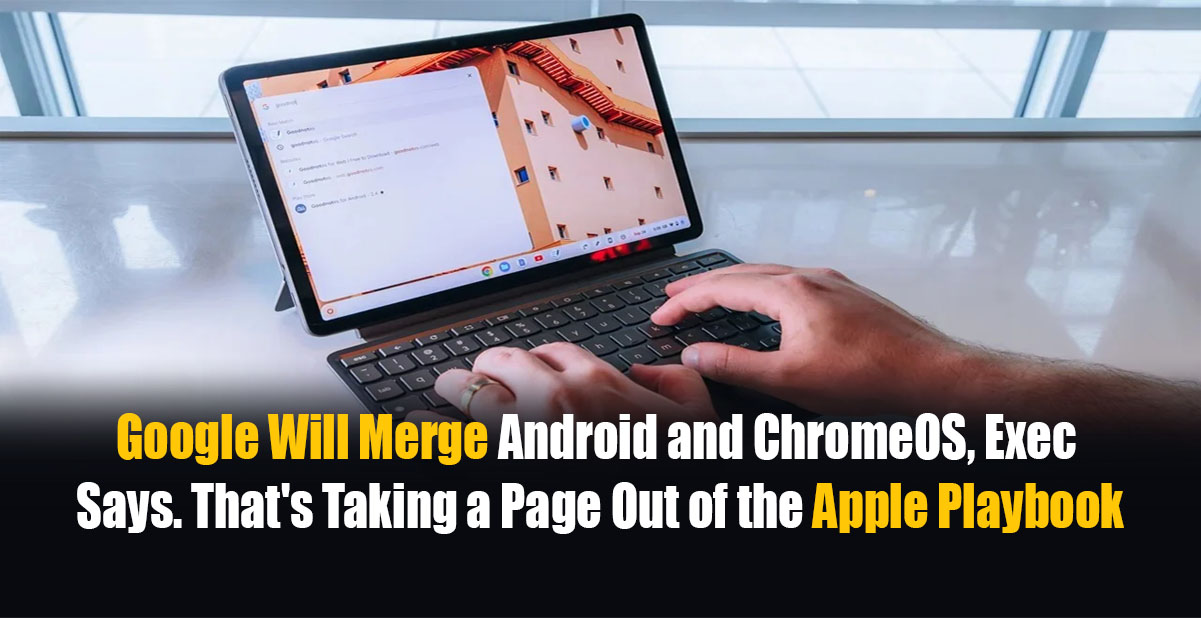
Big news in tech: Google plans to merge Android and ChromeOS. That’s straight from Google leadership and reflects Apple’s move with its tightly interconnected products. Hiroshi Lockheimer, who leads Google’s platforms and ecosystems, pointed to Apple’s seamless blend of hardware and software as a model worth following. This isn’t a small tweak. It’s a major pivot in how Google thinks about its platforms. For years, Android was a mobile powerhouse. ChromeOS thrived in classrooms and on lightweight devices. But fragmentation has always been a problem. Touch-based Android apps stumble on Chromebooks, while ChromeOS feels disconnected from the Android world. Now, Google wants to fix this. The goal: consistency across devices—phones, tablets, foldables, and laptops. It’s Apple’s playbook, but with a Google touch. This is Google admitting that people value how well their devices work together. Ecosystems matter more than ever. The phrase Google Will Merge Android and ChromeOS, Exec Says. That’s Taking a Page Out of the Apple Playbook marks a turning point. Google is moving toward deeper integration to keep up with Apple.
This merger is designed to solve old frustrations. Imagine running your favorite Android app directly on a Chromebook. No hacks, no laggy emulators. Developers win too—write one app, reach all of Google’s devices. Tools like Flutter already make it easier, but a single operating system could streamline everything. Some wonder if technical differences between ChromeOS (Linux) and Android (Java) are too big to overcome. Google’s work on Fuchsia OS hints at a path forward. The timing matters. Apple’s chips now bridge Macs and iPads. Microsoft is blending Windows with Android through features like Phone Link. If Google stands still, it risks being left out. This unification is about staying relevant—and competitive. Google plans to merge Android and ChromeOS, according to an executive. It’s not imitation. It’s a necessary response.
Why Apple’s Playbook Is the Blueprint
Google Will Merge Android and ChromeOS, Exec Says. It’s a move straight from Apple’s strategy book. Apple’s tightly connected ecosystem builds loyalty, but, more crucially, it drives revenue. iPhones, Macs, iPads, Watches—they all share services: iMessage, Handoff, Universal Control. This isn’t accidental. When devices cooperate, leaving even one breaks the rhythm. Apple has perfected that.
Take Continuity. Apple users begin an email on their iPhone, finish it on their MacBook. It just works. For ChromeOS and Android, switching is clunky. People rely on tools like Pushbullet to patch the gaps. Google sees the gap. A unified OS could simplify life by offering:
- Seamless app compatibility: One app. Every device.
- Unified notifications: Clear an alert on your phone, and it disappears everywhere.
- Hardware synergy: Pixel phones act as Chromebooks’ trackpads. One device triggers features in another.
- Shared subscriptions: One login for YouTube Premium or Google One, no extra steps.
There’s more. Apple owns its chip design—A-series, M-series—so its devices hum in harmony. Google’s building something similar with Tensor chips. Not as mature, but headed there. Full control lets Google tweak battery life, security, and AI. Imagine Gemini offering cross-device intelligence, anticipating your needs from phone to laptop.
All about the ecosystem. Once you’re in, you tend to stay. Apple’s services brought in $78B in 2023. With better integration, Google could see a big boost to Workspace, Play Store, Ads. Google Will Merge Android and ChromeOS, Exec Says. That’s Taking a Page Out of the Apple Playbook. The logic is clear—when a model works, why redesign it?
How the Android-ChromeOS Merger Could Work
Merging Android and ChromeOS isn’t just copy-pasting code. It means untangling foundations—kernels, APIs, user interfaces. Android stands on the Linux kernel, wrapping it in Java APIs. ChromeOS does too, but with a focus on web apps and desktop habits. A real merger would take more than duct tape. Here’s what that could look like:
- A hybrid kernel. Maybe based on Fuchsia. One that bridges mobile instincts and desktop expectations.
- Adaptable UI frameworks. Switch layouts instantly—tablet one second, desktop the next.
- Virtual Machines. Run Android apps natively on ChromeOS, but keep them isolated for security.
There are glimpses already. Crostini put Linux apps on Chromebooks. ARC++ opened doors for Android apps. But these were workarounds—temporary bridges, not a unified path. True merging? That means developers target “Google OS. ” Apps scale automatically from small phone screens to full laptops. Users buy an app once, it follows them everywhere. Settings and states sync with Google Drive. Convenience, check. But security can’t slip—ChromeOS’s strongholds (verified boot, sandboxing) need to carry over to mobile.
- Role-based access. Imagine work profiles seamlessly blending with ChromeOS logins.
- Zero-trust frameworks. Authentication adapts to device, context, even location.
- Cross-device encryption. Share security keys across platforms—unlock apps or authorize payments simply, safely.
This isn’t just about merging systems. It’s about blending philosophies. Retain the ease of ChromeOS. Preserve Android’s adaptability. Make the experience seamless, wherever you are.
Global Implications: Winners and Losers
The announcement—Google Will Merge Android and ChromeOS, Exec Says. That’s Taking a Page Out of the Apple Playbook—lands like a stone in global markets. In the US, enterprise and education sectors stand to gain. Chromebooks are already staples; now, they’ll run mobile-first apps natively. Result: productivity gets a lift.
But developing markets also get a break. Why buy both a phone and a PC when one low-cost Chromebook runs Android apps seamlessly? It’s practical. It’s efficient. Still, not everyone wins. Hardware partners face tough choices. Samsung, for example, currently balances Android phones with Windows laptops. A single Google OS could press them—hard—to shift toward Google-first devices.
PC makers like Dell or HP? They may see Chromebook market share slip, especially if Google starts pushing Pixel-first features. For developers, there’s a silver lining: one platform means less fragmentation. But it comes at a cost—learning new, unified APIs. Subscription apps get a bigger runway, spanning phones and laptops. But smaller developers might wince at the redesigns needed.
Apple finds itself in the line of fire. Its systems—macOS and iOS—are separate by design. But Google’s new OS could bridge everything, from affordable $200 Chromebooks to high-end Pixel Foldables. That’s pressure.
Microsoft watches, too. Its own Windows-Surface-Android blend faces a focused rival now. Privacy concerns stack up. A single OS lets Google track more user activity than ever. However, faster, broader security patches could shield billions.
Antitrust shadows stretch long. Europe’s Digital Markets Act keeps gatekeepers in check. If Google merges everything, regulators may tighten their focus. But democratization is possible. Advanced features, once only in Apple’s premium lane, could become widely accessible.
The Road Ahead: Timelines and Expectations
The merger of Android and ChromeOS by Google—yes, execs are publicly saying it’s happening—won’t arrive in a single leap. Big changes take time. Google’s history (think: endless messaging apps) reminds us to set measured expectations. Leaks from trusted sources point to 2027 as the big year for roll-out, but this will come in stages:
- Phase 1 (2024-2025): Expect tighter Android and ChromeOS connections—shared settings, a unified Play Store. Not a full merger yet, just a blending of familiar features.
- Phase 2 (2026): Behind the scenes, Pixel devices get a shared kernel. A technical shift with big impacts—mostly invisible, but significant.
- Phase 3 (2027+): Older Chromebooks and Android phones receive legacy support as the new platform becomes standard. Change rolls out, but support lingers.
Keep an eye on Google I/O 2025. That’s when previews should drop, alongside new Pixel hardware—a peek at the merged universe. Picture a foldable device that functions as both phone and Chromebook. Hybrid in the truest sense. But hurdles remain:
- App compatibility: Can existing Android apps feel at home on larger, desktop-style screens?
- Enterprise adoption: Is Google ready to compete with Windows on device management and reliability?
- User retraining: ChromeOS fans aren’t used to mobile-style notifications. How will they navigate a potentially busier UX? Confusion is possible.
Developers will make or break this transition. Google needs to deliver intuitive, powerful tools—a seamless way to port and rework apps for the new reality. If the company succeeds, expect echoes of Apple’s careful Mac transition to Silicon. Not painless, but transformative. If it stumbles, Apple and Microsoft stand to gain. Three billion users could see their daily tech reimagined, or just get left with more fragmentation.
FAQs: Your Top Questions Answered
Q: Will my existing Android phone or Chromebook become obsolete?
b Not likely. Google plans to keep supporting older devices for several years. You’ll need new hardware for some fresh OS features—but that’s down the road, after 2027.
Q: How will app developers be affected?
A: In the long run, things get easier. One build, many devices. For now, though, developers will have to adapt to new interfaces and tools.
Q: Is Google copying Apple too closely?
A: It’s deliberate. Google is adapting ideas to fit a wider mix of devices and price points—not just the high-end market that Apple prefers.
Q: Could this face regulatory issues?
There’s a chance. Especially in the EU, where regulators keep a close watch on tech giants and their control over operating systems.
Q: Will this improve security?
A: Yes A:. Streamlined updates and stronger app isolation help cut down on security flaws.
Conclusion: A Bold Leap Toward Integration
Google plans to bring Android and ChromeOS together, according to a company executive. It’s a strategic move—think of it as borrowing a chapter from Apple’s book, not just copying homework. This is about progress. By merging mobile and desktop, Google cuts down on fragmentation. It also steps up to Apple, aiming for more balance in the ecosystem race. What does this mean in practice? Simplicity for users. You can start editing a Docs file on your Pixel Fold, then move to a Chromebook and keep working, adjusting windows without a hitch. For developers, there’s less busywork—no need to juggle two separate platforms. Apps become adaptive, ready everywhere. Challenges are real. Technical complexity, regulatory questions, and shifts in how users interact all stand in the way. Yet the potential impact is significant. More people get access to seamless technology, not just those who buy into Apple’s high-end lineup. With projects like Fuchsia OS in the background and Tensor chips evolving, Google’s integrated vision is taking shape. Not just Android. Not just ChromeOS. Something new—one unified digital environment. Change is coming. Integration isn’t just the plan. It’s the next step.